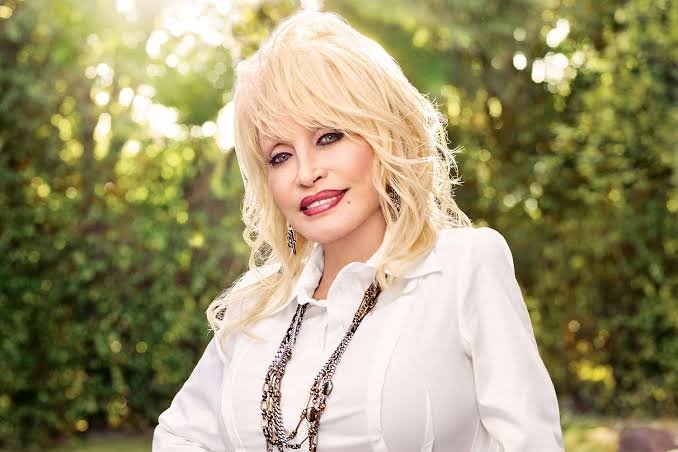
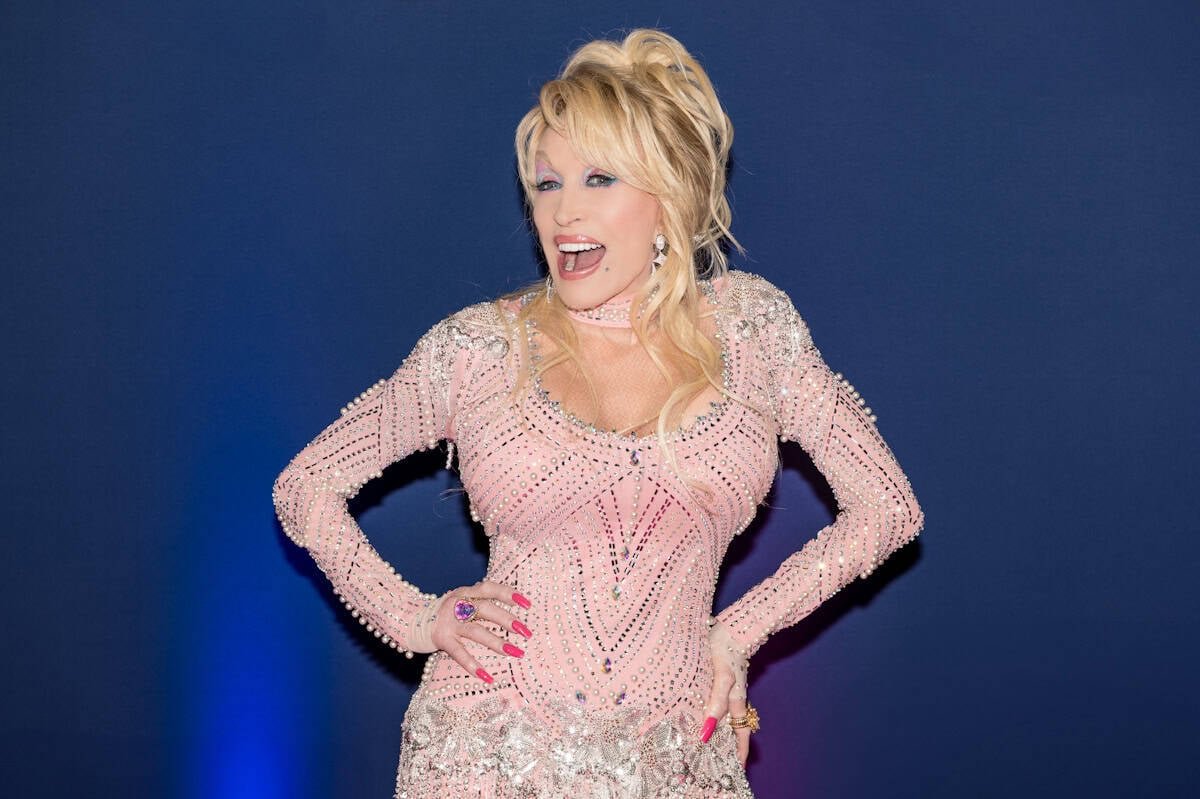
She was Aunt Dolly.
Her godmother.
A mentor who had been present through Miley’s childhood, controversies, transformations and evolution as an artist.
After Dolly’s death, Miley shared an emotional tribute recalling one of their final conversations and the relationship they had maintained throughout her life.
Dolly had appeared alongside Miley on Hannah Montana. They performed together. They recorded together.
And through all of Miley’s musical reinventions, Dolly remained one of the rare figures whose advice carried both personal and professional weight.
Miley described Dolly as someone whose guidance would continue even after death — almost like a guardian presence she would still try to make proud.
That distinction matters.
To the world, Dolly was the Queen of Country.
To Miley, she was family.
And grief sounds very different when the person whose songs belong to everyone also belongs to you.
Reba McEntire’s Goodbye Came From One Country Queen to Another
Then there was Reba McEntire.
Few artists could understand the world Dolly inhabited as completely as Reba.
Both women built careers that survived changing generations, changing radio formats and changing expectations of female country performers.
But Reba’s public reaction was not about compeтιтion or accomplishments.
It was graтιтude.
Following Dolly’s death, Reba thanked God for Dolly’s life and imagined her reunited in heaven with family and friends who had gone before her — singing again, surrounded by the people she loved.
It was unmistakably Reba: warm, spiritual and deeply personal.
And it revealed something important about Dolly’s position inside country music.
She was not merely admired.
She was loved by the very people who understood how difficult her journey had been.
Vince Gill Tried to Sing Goodbye — Then Emotion Took Over
Perhaps no tribute captured the rawness of the loss more dramatically than Vince Gill’s.
Two days after Dolly died, Gill took the stage at the Midland Theatre in Kansas City.
He chose the song most closely ᴀssociated with saying goodbye:
“I Will Always Love You.”
The choice carried extraordinary history.
Dolly wrote the song decades earlier, and Gill later recorded it with her as a duet in 1995.
This time, he had to sing it alone.
He struggled.
Emotion interrupted the performance, and members of the audience helped carry the song when Gill needed a moment to compose himself.
He had already said that his family was devastated by Dolly’s death and remembered the sound of their voices together as one of the most beautiful musical experiences of his life.
No long speech was necessary.
The moment his voice faltered told the story.
Sometimes grief is most powerful when someone cannot finish the sentence.
Lily Tomlin Remembered the Woman Behind the Movie Star
Lily Tomlin, Dolly’s co-star in the landmark 1980 film 9 to 5, was also among the friends and entertainers who publicly remembered her after the news broke.
Their friendship represented another part of Dolly’s extraordinary reach.
She could move easily between Nashville and Hollywood without ever seeming to abandon the personality that made audiences love her in the first place.
Tomlin and other colleagues remembered not only the performer, but Dolly’s humor, warmth and generosity — qualities repeatedly mentioned in tributes from entertainers across music, television and film.
That consistency is striking.
Almost everyone seemed to remember the same basic thing:
The private Dolly was remarkably similar to the public Dolly.
The kindness was not merely branding.
And Then There Was Judy Ogle
Among the names inseparable from Dolly’s personal story is Judy Ogle, her friend since childhood.
Their friendship stretched across the years before fame, through Dolly’s rise in Nashville, through Hollywood, Dollywood and everything that followed.
Because Dolly’s burial was deliberately private, there is no reliable public account confirming that Ogle, Miley Cyrus, Reba McEntire, Lily Tomlin or Vince Gill delivered speeches inside the funeral itself.
That distinction matters.
Many of the “final farewells” the public has seen came through social media, interviews and performances surrounding Dolly’s death rather than from inside the closed family ceremony.
The funeral belonged to the family.
The public tributes belonged to everyone else.
And perhaps Dolly would have appreciated that separation.
One Dolly — A Million Different Memories
That may be the most heartbreaking part of losing someone as universally loved as Dolly Parton.
Everyone lost someone slightly different.
Her relatives lost the woman who remembered birthdays, made calls and encouraged dreams.
Miley lost Aunt Dolly.
Reba lost a friend and peer.
Vince Gill lost the voice that once blended perfectly with his own.
Hollywood lost the woman who could walk onto a movie set and somehow remain completely herself.
Tennessee lost one of its most famous daughters.
And millions of people who never met her still felt as though something familiar had disappeared.
The world knew the wigs.
The rhinestones.
The jokes.
“Jolene.”
“9 to 5.”
“Coat of Many Colors.”
“I Will Always Love You.”
But the farewell revealed something quieter.
Behind all of it was a woman whose greatest impact may not have been the size of her career, but the way people felt after knowing her.
The Final Goodbye Was Never Going to Be the End
Dolly Parton was buried beside Carl Dean.
But her story is nowhere near finished.
Her Imagination Library continues putting books into children’s hands.
Dollywood has announced permanent new ways to preserve her legacy.
Her music will continue playing.
And family members have made clear that projects Dolly began before her death will move forward.
Perhaps that is why the private ceremony feels so appropriate.
Dolly did not need one final enormous show.
She had already given the world seven decades of them.
In the end, she simply went home to the people she loved.
No blinding lights.
No roaring crowd.
Just family.
Memories.
And a quiet goodbye to a woman whose voice will continue long after the silence of that Nashville morning has faded.