âś“ 24HNEWS

💔 DOLLY PARTON & KENNY ROGERS — Did She Secretly Dream of Leaving Everything Behind for the Man She Could Never Have?

Posted by Max - September 8, 2026

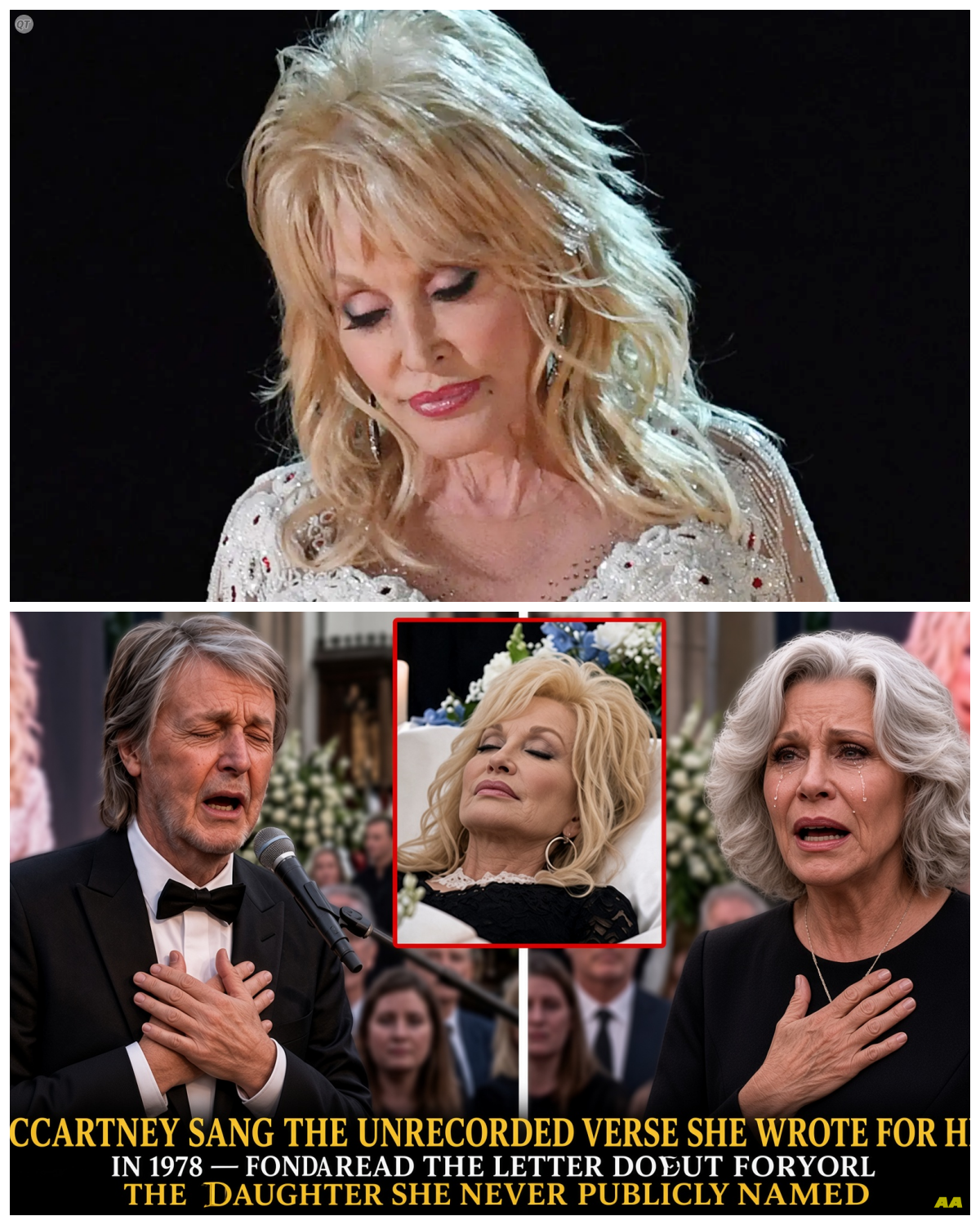
The Final Farewell That Revealed the Hidden Heart of Dolly Parton’s Legacy

On the day Dolly Parton’s life quietly ended, the world felt a heavy silence settle over Nashville, as if the very lights that once illuminated her brilliance had dimmed forever.


Her voice, once the soundtrack of countless lives, had fallen silent.


Yet, behind that radiant smile and glittering fame lay a story of love, sacrifice, and secrets that few dared to confront.


The family she built, the love she cherished, and the unspoken truths she carried now threaten to reshape her legend in ways no one anticipated.


It began with a simple, poignant moment—Stella Parton, her sister, posted a brief message on social media just three days after Dolly’s pᴀssing.


Her words, succinct but loaded with emotion, immediately ignited a firestorm.


She revealed that Dolly had harbored feelings for Kenny Rogers—a love so deep that she once contemplated running away with him.


That confession, delivered with quiet honesty, shattered the idealized image of a woman who seemed to have everything under control.


It was a secret kept in the shadows, a love so sacred that even her closest family members had only glimpsed it in quiet moments.


The timing of Stella’s revelation was no coincidence.


It followed heartfelt tributes from Kenny Rogers’ family, who spoke of Dolly as more than a duet partner—describing her as a soulmate, a kindred spirit.


They recalled how their bond was built on playful flirtations, shared dreams, and a mutual respect that defied societal boundaries.


Her words hinted at a love that had endured silently for decades—a love that was never meant to be spoken aloud but was etched into the fabric of their lives.


To understand the depth of this revelation, one must look back at Dolly’s extraordinary journey.


From her humble beginnings in Sevierville, Tennessee, she rose to become a global icon, her voice a beacon of hope for generations.


Her marriage to Carl Dean in 1966 was a quiet sanctuary amid the chaos of fame—a union rooted in loyalty, understanding, and a love that had survived more than half a century.

Yet, behind that quiet strength was a woman who had quietly sacrificed her own happiness for her family, her career, and her faith.


But as Dolly aged, cracks appeared in her carefully constructed facade.


Her health, once a private matter, became a public concern.


She openly admitted to health issues—diagnosed with early-stage kidney problems, battling the effects of aging, and experiencing a slow decline that she refused to let define her.


Her family, especially Stella, sensed the subtle signs—tired eyes, canceled performances, whispered admissions of fatigue.


Despite her insistence that she was “still fighting, the reality was far darker.


Behind closed doors, the family’s fractures widened.


Her son, Kevin Hunter Jr.


, publicly accused her husband William McDowell of manipulation and financial exploitation, claiming that her autonomy was being stripped away, her voice silenced by those around her.


The accusations, made in 2026, were not mere whispers—they were a thunderclap that challenged everything Dolly had built.


Her guardianship, court-ordered and fiercely defended, had turned her into a shadow of herself, her estate controlled by others while she struggled to hold onto her idenтιтy.


The legal battles that ensued revealed a woman fighting to reclaim her life.


A court-appointed guardian, Sabrina Morrissey, held the reins of her finances, her decisions, and her independence.


Dolly’s own publicist, Laura Herlovich, dismissed Kevin’s claims as baseless, emphasizing her client’s health and happiness.


But behind the scenes, Dolly’s words told a different story—a woman battling not just illness but the loss of her voice, her freedom, and her legacy.

The most devastating revelation came in 2024, when her medical team announced she had primary progressive aphasia and frontotemporal dementia—conditions that erode speech, personality, and cognition slowly and relentlessly.


For a woman whose career depended on her wit and words, this diagnosis was a cruel blow.


Footage from her last interviews showed her battling alcohol addiction, slipping into confusion, and struggling to remember her own words.


She openly admitted her battle with alcohol, a moment that felt like a slow-motion unraveling caught on camera.


Yet, amidst the chaos, Dolly’s own words revealed a woman fighting to hold onto her idenтιтy.


In her final public appearances, she insisted she was “still working, still fighting, still alive.


Her message was one of defiance—a declaration that she was not finished, not defeated.


But Stella’s social media post hinted at a different truth: a woman who loved secretly, sacrificed her happiness, and faced her final days with unspoken longing.


Her love for Kenny Rogers was more than just a duet.


It was a spiritual bond, a love so profound that it endured silently through years of fame and personal tragedy.


Their most iconic song, “You Can’t Make Old Friends, was an ode to that enduring connection.


They teased each other on stage, flirted behind closed doors, and shared moments of genuine affection that transcended societal expectations.


Kenny himself admitted that their relationship was built on a refusal to cross into romance—because they knew that what they shared was sacred enough to last a lifetime without risking it all.


When Kenny Rogers died in 2020, Dolly was devastated.


Her tearful tribute spoke volumes about the depth of their friendship.


She called him her “brother, her “soulmate, and admitted that his absence left a void impossible to fill.


Behind her tears was a silent acknowledgment that their love had been a secret, a love that could never be spoken aloud, even in death.


And when Dolly herself died in 2026, her family’s tribute echoed that sentiment.


Freda Parton, her niece, wrote a heartfelt letter describing Dolly’s love for Kenny as “the purest form of love—a love that existed beyond societal constraints and was kept hidden in the shadows of their lives.


Stella’s own words confirmed that Dolly’s love for Kenny was a silent, sacred flame—an unfulfilled longing she carried quietly to her grave.


The final months of Dolly’s life were a delicate dance of pain and dignity.


She battled health issues, loneliness, and the weight of unspoken love.


Her public appearances grew fewer, her voice softer, her smile more fragile.


Yet, her family knew the truth—that she had loved Kenny fiercely, secretly, and eternally.


That love was her true final chapter—a love story that no one could ever erase.


As her family laid her to rest, the world was left with questions.


Did Dolly ever truly reconcile her love for Kenny with her vows?

Was her final act a silent rebellion against a society that demanded she choose?

Or was her love simply a beautiful secret—a gift she kept close to her heart until her last breath?

The answers are buried deep within family confidences, sealed court files, and the unspoken pain of a woman who loved too much to ever be free.


What remains undeniable is this: Dolly Parton was more than a star.


She was a woman who loved fiercely, secretly, and with a purity that transcended time.


Her love for Kenny Rogers was a testament to that truth—a love that will echo in the hearts of her family and fans forever.


And in her final silence, perhaps she finally found the peace she longed for—a love story that no one could ever take away.

âś“ Max

The Final Farewell That Revealed the Hidden Heart of Dolly Parton’s Legacy On the day Dolly Parton’s life quietly ended, the world felt a heavy silence settle…

Leave a Reply