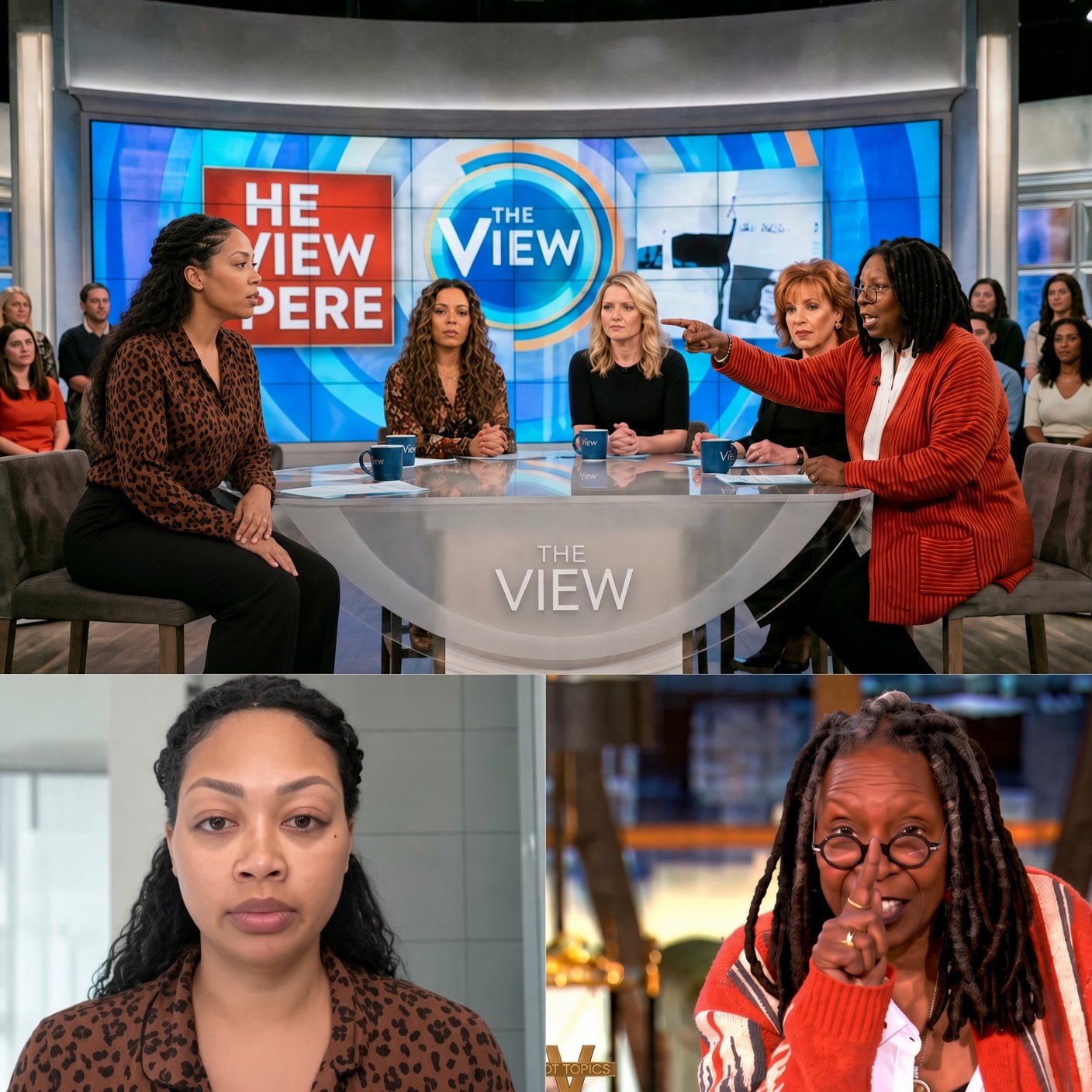
CHRISTINE WONSLEY BREAKS THE INTERNET AFTER EXPLOSIVE WALK-OFF FROM ‘THE VIEW’
What was expected to be a controlled daytime television interview suddenly turned into one of the most emotionally charged moments imaginable when Nolan Wells’ mother, Christine Wonsley, found herself at the center of a fierce confrontation on The View.
In this dramatized scenario, Christine arrived on set carrying the quiet exhaustion of a mother who had spent weeks living with grief, unanswered questions, public scrutiny, and the relentless pressure that comes when a family tragedy becomes a national conversation.
She did not walk onto the stage looking for a fight.
She did not raise her voice.
She did not arrive with a dramatic speech prepared for television.
But within minutes, the tone changed completely.
The discussion began with questions surrounding Nolan Wells’ death and the intense public debate that had followed.
Christine attempted to explain why she continued asking for transparency and why she believed unanswered questions deserved serious attention.
Then the conversation became tense.
And when Whoopi Goldberg challenged the direction of Christine’s remarks, the atmosphere inside the studio shifted almost instantly.
“This Is Not an Investigation Room”
Whoopi, in the fictional exchange, cautioned Christine against allowing questions to turn into accusations.
“This is a talk show,” she said sharply. “We can discuss what happened, but this is not an investigation room.”
Christine remained still.
For several seconds, she said nothing.
That silence carried more weight than shouting ever could.
She leaned forward slowly and looked directly across the table.
“Whoopi,” she said, “I understand exactly where I am.”
The room quieted.
“But you need to understand something too.
I am not here because I enjoy talking about the worst thing that has ever happened to my family.”
Her voice remained controlled.
“I am here because my son is gone.”
The studio audience became noticeably quieter.
Christine continued.
“And every day I wake up with questions I cannot turn off just because television has a time limit.”
The Moment Everything Changed
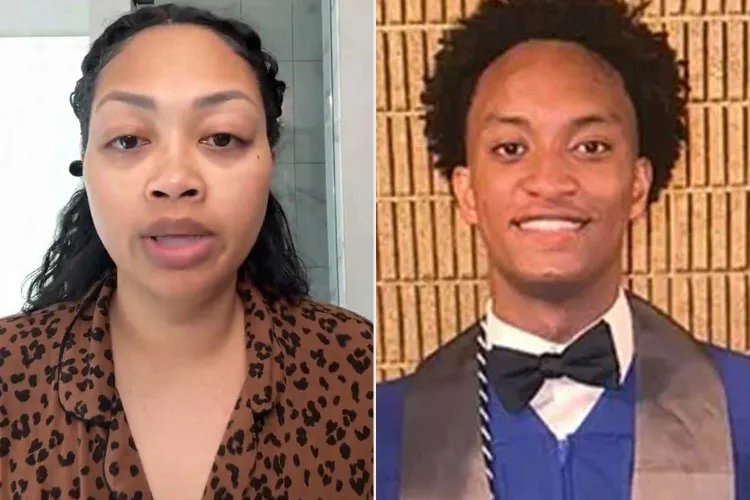
Whoopi attempted to respond, but Christine was no longer speaking like a guest trying to survive a difficult interview.
She was speaking like a mother who believed she had been asked to compress grief into a television segment.
“You can tell me to be careful,” Christine said. “You can tell me not to speculate. I understand that.”
Then she paused.
“But do not confuse asking questions with attacking people.”
The distinction immediately changed the tone of the fictional exchange.
Christine was not claiming to know who was responsible for Nolan’s death.
She was not naming suspects.
She was not presenting rumors as evidence.
Instead, she was demanding the right to ask why certain questions remained unresolved.
That mattered.
Because in a case surrounded by social-media theories, incomplete information, and public emotion, the difference between a question and an accusation can easily disappear.
Christine seemed determined not to let that happen.
“You Don’t Get to Decide Which Questions Are Comfortable”
The confrontation intensified when the panel challenged the role social media had played in amplifying speculation surrounding Nolan’s case.
Christine listened.
Then she responded.
“You can criticize the internet,” she said. “Sometimes you should. There are people saying things they cannot prove.
There are people turning tragedy into entertainment.”
She looked directly toward the panel.
“But there is another danger.”
The room went silent again.
“When people become so afraid of uncomfortable questions that they stop asking them at all.”
That line became the emotional center of the fictional segment.
“You don’t get to decide which questions are comfortable enough for a grieving mother to ask,” Christine said.
“You don’t get to tell me that because some people online went too far, I should stop wanting answers.”
Joy Behar shifted in her chair.
Sunny Hostin appeared ready to intervene.
But Christine continued.
“My responsibility is not to make this discussion comfortable.”
Her voice тιԍнтened slightly.
“My responsibility is to my son.”
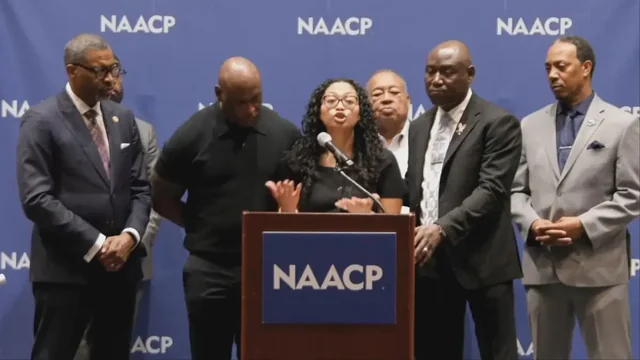
Whoopi Pushes Back
In the imagined confrontation, Whoopi pushed back harder.
“We are not telling you not to grieve,” she said.
“We are saying there are consequences when unverified claims are repeated publicly.”
It was a significant point.
Christine nodded.
“There are,” she answered.
Then she added:
“And there are consequences when families feel like nobody is listening.”
That response landed differently.
Because suddenly, the argument was not about whether rumors were dangerous.
Both sides appeared to agree they were.
The disagreement was about what should happen when public uncertainty remains.
Should families remain quiet?
Should they wait indefinitely?
Should they trust that every relevant question is already being asked behind closed doors?
Or do they have the right to speak openly about what they still do not understand?
There was no simple answer.
And that complexity made the fictional confrontation feel more intense.
“Somebody Cut Her Mic”
The moment that supposedly shattered the rhythm of the show came when Christine accused television culture of deciding which questions deserved airtime.
“This is what scares me,” she said.
“You can have five people sit around a table and discuss my son’s death.”
She tapped the desk once.
“But the moment his mother asks something you cannot answer, suddenly the conversation becomes too uncomfortable.”
Whoopi interrupted.
“That is not fair.”
Christine immediately responded.
“Neither is burying your child.”
The room froze.
In the dramatized scenario, Whoopi turned toward the production team.
“Somebody cut her mic — now.”
But before anything happened, Christine had already reached for it herself.
She unclipped the microphone.
She held it in her hand.
And then she stood.
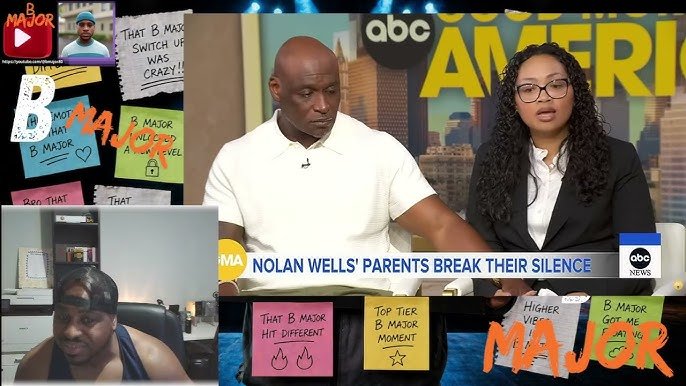
The Walk-Off That Changed the Entire Segment
Christine did not storm away.
She did not scream.
She did not throw anything.
Instead, she looked across the table and delivered the line that, in this fictional scenario, would dominate social media within minutes.
“You can turn off my mic.”
A pause.
“But you cannot turn off a mother’s questions.”
No one moved.
“And you cannot make the truth disappear simply because the conversation became uncomfortable.”
Christine placed the microphone carefully on the desk.
Then she turned.
She walked away from the table.
Across the studio.
Past the cameras.
And disappeared backstage.
There was no dramatic music.
No applause.
No final argument.
Just silence.
Social Media Erupts
Within minutes, the fictional clip began spreading everywhere.
Some viewers praised Christine for refusing to allow her grief to be reduced to a television debate.
Others defended Whoopi, arguing that talk-show hosts have a responsibility to prevent unverified allegations from being presented as fact.
That division became immediate.
But something else happened too.
People began discussing the difference between asking questions and making accusations.
One fictional viewer wrote:
“A mother asking for answers is not the same as accusing someone.”
Another responded:
“But grief does not make every theory true.”
Both statements could coexist.
And perhaps that was why the imagined confrontation struck such a nerve.
It reflected a much larger struggle surrounding high-profile tragedies.
Families want answers.
The public wants answers.
Social media wants answers immediately.
But investigations move differently.
Evidence takes time.
Witness statements must be checked.
Digital records require analysis.
Forensic conclusions cannot responsibly be replaced with online certainty.
A Mother, Not a Headline
Christine’s fictional walk-off became powerful because it stripped away the spectacle surrounding Nolan’s story.
To the internet, Nolan may be a case.
A mystery.
A debate.
A trending topic.
To Christine, he was her son.
That difference changes everything.
For viewers, a television segment ends.
For a grieving mother, nothing ends when the cameras switch off.
She still goes home.
She still sees pH๏τographs.
She still remembers ordinary conversations.
She still wakes up knowing someone she loved is gone.
And she still asks questions.

The Final Image
The imagined segment ended without resolution.
Whoopi remained at the table.
The panel sat quietly.
Christine never returned to the set.
And the empty chair beside the desk suddenly became the strongest image of the entire broadcast.
Not because it proved anything about Nolan Wells’ death.
It did not.
Not because Christine had answered every question.
She had not.
But because it represented a mother who believed there was one line she would not cross.
She would not allow grief to be treated like entertainment.
She would not allow uncertainty to be mistaken for certainty.
And she would not stop asking questions simply because other people were tired of hearing them.
In this dramatized scenario, Christine Wonsley walked onto The View hoping to talk about her son.
She walked off after reminding everyone watching that Nolan Wells was never just a headline.
He was someone’s child.
And behind every unanswered question was a mother still waiting for something far more important than another television debate.
The truth.