🦊 FBI & ICE STORM AN ALLEGEDLY LINKED LUXURY MANSION, 400 DETAINED AS SEALED DOCUMENTS FUEL A BILLION-DOLLAR MYSTERY 😱

🦊BREAKING DRAMA AS FEDERAL AGENTS MOVE FAST, NUMBERS SKYROCKET, AND OFFICIALS REFUSE TO EXPLAIN THE MONEY TRAIL 🚨
If you thought Minnesota was just polite people, frozen lakes, and H๏τdish cook‑offs, think again — because federal agents just arrived in the Twin Cities with the subtlety of a reality show rampaging through a library.
In what authorities are calling a sprawling law‑enforcement operation, ICE and the FBI reportedly carried out what might be the most chaotic sweep of recent memory, scooping up around 400 people in a Somali‑linked crackdown that has left politicians yelling, advocates weeping, local business owners hiding behind cash registers, and the entire world’s comment section exploding like someone pulled the fire alarm in a psychology lecture.
It wasn’t just a raid.
It was a bonafide cultural moment that somehow managed to combine immigration enforcement, fraud investigations, political blame‑games, conspiracy theories, and viral memes — all before breakfast.
It all began as federal agents fanned out across Minneapolis and St.
Paul, executing enforcement actions targeted at suspected immigration violations and alleged fraud cases.
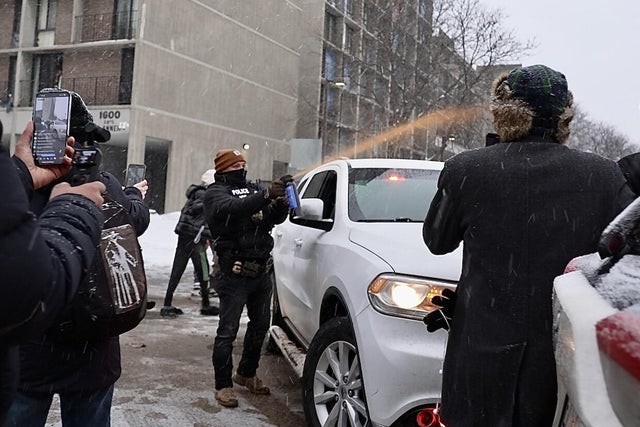
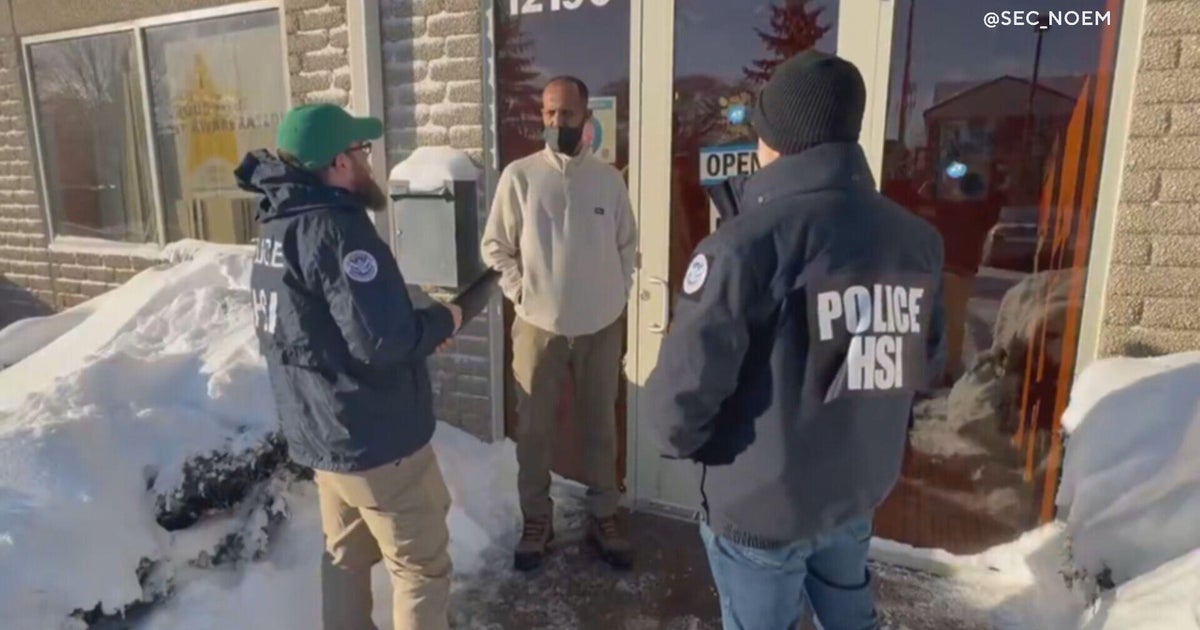
According to official statements, the goal was to arrest individuals who had outstanding orders for removal, some with criminal convictions, and to investigate alleged fraud tied into state programs — a sprawling, complex investigation that federal prosecutors have said includes hundreds of leads and is rooted in long‑running inquiries.
And yes, the numbers are real: federal sources confirmed that about 400 arrests were made as part of this operation, one of the largest enforcement actions in Minnesota in decades.
But as soon as word hit the streets — and by “streets” we mean every social platform known to humankind — the predictable spiral of hysteria, speculation, outrage, and utter nonsense began.
Within minutes, hashtags like #TwinCitiesSweep, #400GhostsOfMinneapolis, and #FedsInTheCold were trending.
People weren’t just reporting it — they were performing it.
Meme factories worked overtime.
One viral image depicted ICE agents dressed like Jedi knights storming the Mall of America, lightsabers drawn.
Another showed a cartoon map of Minnesota with a giant red X labeled “Now Deportation Island.
” Someone even doctored the state flag to include emergency sirens.
Because of course.
Fake experts materialized with dizzying speed, as if summoned by the sheer force of the hysteria.
Dr.Otto Overthink — who lists his credentials as “Quantum Political Analyst and Cultural Chaos Theorist” on a livestream — declared, “This operation is either the dawn of a new national law‑and‑order era or the opening salvo of the Midwest’s Great Great Immigration War.
Only time, and possibly TikTok, will tell.
” Another “scholar,” appearing on video with dramatic lighting behind him, claimed, “The sheer number — 400 — indicates some hidden network of shadow governance that predates the Vikings.
” Neither provided evidence.
Both went viral.
Back on the ground, actual residents tried to process what was happening in real time.
One Somali‑American business owner, clutching his apron and staring at deserted sidewalk storefronts, said, “Customers who once came daily now walk by like the streets belong to an apocalypse movie.”
Another resident described the scene as “eerily silent, like everyone is waiting for the next disruption.”
A third, trying to balance his grocery bag and his dignity, muttered, “We came here for opportunity, not to become a headline.”
To be clear, federal officials insisted this was not a random dragnet.
ICE leadership called the operation a targeted enforcement aimed at individuals with prior immigration violations and, in some cases, convictions for crimes including ᴀssault, robbery, and worse.
Homeland Security argued that removing individuals with criminal records is part of its mission to protect public safety.
But in the swirl of overreaction and rumor, nuance was drowned out like a sermon in a windstorm.
Because the internet doesn’t just react.
It escalates.
Within minutes of the first reports, social media had invented versions of events that ranged from the absurd to the apocalyptic.
One post claimed that 400 people had been taken to a secret bunker beneath the Mall of America.
Another alleged Minnesota was about to announce its own secession and become the Republic of Northlandia.
A third insisted that the FBI had discovered an underground cartel lair directly underneath the downtown skyway system, complete with secret tunnels, encrypted Ledgers, and a subterranean Starbucks that only serves H๏τ water and contempt.
None of these were true — but that didn’t stop them from being shared tens of thousands of times.
Mainstream media, of course, jumped into the fray with all the subtlety of a siren blasting karaoke at 3 a.m.
Headlines in some outlets veered into dramatic territory: “Minnesota Under Siege,” “Federal Forces Flood Twin Cities,” “400 Snatched, Families Terrified.”
Others were more restrained but still leaned hard into the spectacle.
TV panels debated whether this was a crackdown on crime or a crackdown on culture, with commentators yelling over each other like rival gladiators.
One analyst insisted the raid was part of a global chess match, concluding, “If this isn’t World War Immigration, I don’t know what is.”
Another countered that it was simply legal enforcement done loudly and with terrible PR — which, to some degree, was probably closer to the truth.
Local politicians did not help calm the waters.
Some lambasted the federal action as an overreach, accusing national agencies of targeting entire communities and traumatizing families.
Others cheered the arrests as long‑overdue enforcement, calling it a victory for law and order.
City council members were quoted saying phrases like “unacceptable intrusion” and “we have a right to community safety” in the same breath, causing Twitter to light up like a Christmas tree on steroids.
One mayoral aide, exasperated and wearing three layers of jackets, reportedly said, “We have potholes that need fixing and this is what we’re talking about?”
The confusion was compounded by the general fear that often follows large‑scale law‑enforcement actions.
Somali‑American and other immigrant communities reported mixed feelings of uncertaintly and fear.
Some pointed out that raids like this can erode trust in local insтιтutions, making people less likely to cooperate with police even on unrelated matters.
Others insisted that anyone with criminal history should be held accountable — but that the sweeping nature of the raid made it feel less like justice and more like intimidation.
Amid all this, one particularly bizarre rumor spread like wildfire: that the FBI had uncovered a “billion‑dollar hidden network” tied to the people arrested.
Social media accounts began circulating claims that federal agents had found secret bank vaults, offshore accounts, and encrypted crypto wallets tied to shadowy conspiracies.
None of these claims were backed by verified reporting, but by the time moderators tried to clarify the record, the rumor had already metastasized into hundreds of derivative posts with тιтles like “Feds Find Underground Vault Beneath Somali Mansion” and “Minnesota Money Maze: Billion‑Dollar Fraud Ring Exposed?”

This phantom billion‑dollar narrative was strangely irresistible.
It combined every online obsession: secret riches, shadow networks, ancient mansions, and law enforcement.
A few creative content creators even made mock videos of cartoon bank vaults full of gold bars labeled “Totally Real.”
These videos racked up millions of views — not because they were accurate, but because they were entertaining.
And in the world of social media, entertaining often beats factual.
The FBI and ICE, for their part, stuck to a тιԍнт script.
No “hidden vaults.”
No dramatic one‑billion‑dollar revelations.
Just law enforcement at work, carrying out warrants, removing individuals with criminal or immigration violations, and processing them through the legal system.
But by then, the narrative had outrun reality.
People on both sides of the political spectrum rushed to make the situation mean whatever supported their worldview.
Amid the hype, real families were uprooted.
Eviction notices were served.
Homes were searched.
People were detained.
Some of those arrested had been living in Minnesota for years, with parents and children entrenched in the community.
Local shelters filled up.
Legal aid organizations swung into action.
Lawyers tweeted out emergency contact numbers.
Somalis and others caught in the operation’s wake expressed bewilderment, fear, and heartbreak — and yet their voices were often drowned out by the louder, hyperbolic roar of the commentariat.
Even local businesses felt the impact.
Foot traffic dropped in neighborhoods where the operation was heavily reported.
Some restaurant owners posted concerned messages about decreased customers and worried staff.
One café owner joked that his espresso machine was getting more use from reporters than actual patrons.
Another posted a sign reading, “No news cameras, just coffee,” and that sign went viral as well.
Late‑night comedians found endless material.
“400 Arrests and Minnesota Still Has Potholes,” quipped one host.
Another joked, “If the FBI wanted to scare people, they could’ve just told everyone it was October.
” And as always, the memes kept coming: pH๏τoshopped images of federal agents playing bingo with arrest warrants, cartoons of ice cubes saying, “We are not the problem,” and even a mock SOS from Minnesota reading, “Send more scarves.
”
But beyond the laughs, beyond the chaos and the spectacle, there is a sobering reality: tens, maybe hundreds, of individual lives were affected by this operation.
People lost time with family.
People faced uncertainty.
People found themselves suddenly thrust into a legal system they never expected to navigate.
And while the internet will continue to scream, joke, speculate, and meme its way through every twist and rumor, there is a deeper human story underneath: one about communities grappling with law enforcement, idenтιтy, fear, and belonging.
So what is the takeaway? Is this a justified takedown of dangerous individuals? A sign of federal overreach? A misunderstood PR disaster? A billion‑dollar illusion? Probably a mix of all of the above — minus the secret vaults, the underground lairs, and the dramatic plot twist where an ancient code is decoded by Twitter users at 3 a.m.
But one thing is for sure.
Minnesota has never been boring.
And after 400 arrests, a swirl of claims, memes, fake experts, conspiracy theories, and heartfelt pleas from real people caught in the crossfire, one undeniable truth remains: when federal agents, immigration enforcement, and social media converge on the same story, it’s going to be loud, it’s going to be chaotic, and yes — it’s going to make headline writers feel like they’ve finally found their moment to shine.
In a world where every news event is pressure‑cooked through the internet’s mᴀssive rumor mill, the FBI & ICE sweep in Minnesota didn’t just make headlines.
It exploded them — launching a thousand takes, a hundred theories, and countless GIFs that will probably be reposted on anniversaries for years to come.
So buckle up.
Because even as courts review cases, families come together, and officials explain facts, the spectacle is far from over.
After all, when reality meets rumor, and law enforcement meets livestream, the most unforgettable stories are the ones that make you laugh, cry, and ask the same question, over and over:
Can we please get a fact‑check on that meme?
✓ admin
🦊BREAKING DRAMA AS FEDERAL AGENTS MOVE FAST, NUMBERS SKYROCKET, AND OFFICIALS REFUSE TO EXPLAIN THE MONEY TRAIL 🚨 If you…