
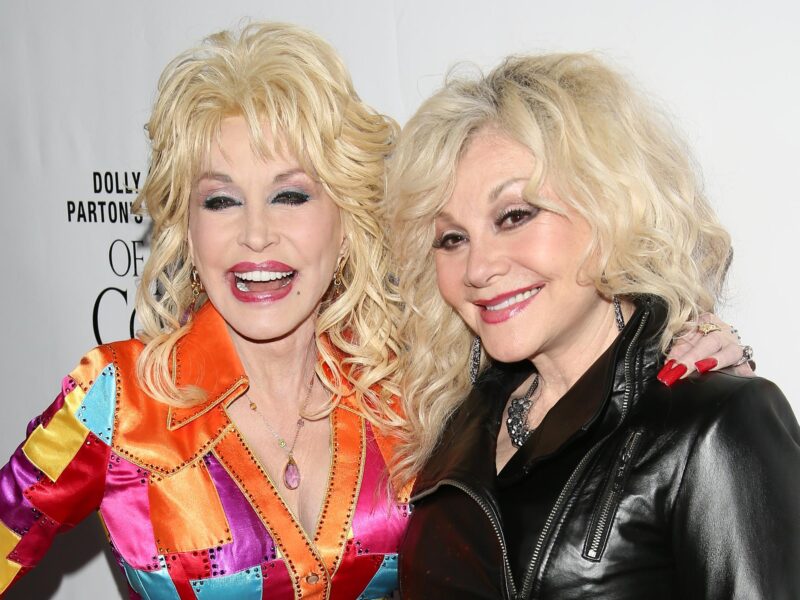
YES, IT’S TRUE: Dolly Parton Finally Confirmed The Long-Running Rumor About Her Body Before Her Death At 80 For decades, fans speculated about one very personal detail of Dolly Parton’s appearance — and the country music icon was never afraid to joke about the rumors. But before her death at 80, Dolly reportedly addressed the long-standing question herself, finally giving fans an answer that many had waited years to hear. Her response was classic Dolly — honest, unexpected and impossible to forget. So what did she finally confirm?

Dolly Parton Confirmed Long-Standing Rumors About Her Body: A Look at the Icon’s Candid Legacy Before Her Death at 80
On August 25, 2026, the world lost one of its most beloved and singular entertainers when Dolly Parton died at the age of 80 in Nashville, Tennessee. The country music superstar, songwriter, actress, businesswoman, and philanthropist pᴀssed away at the Vanderbilt-Ingram Cancer Center after what her representatives described as a brief battle with cancer. She was surrounded by loved ones. Her family and publicist confirmed the news, prompting an outpouring of tributes from across the music industry, Hollywood, politics, and ordinary fans who had grown up with her music and larger-than-life persona.
In the days following her death, many reflections turned not only to her vast catalog of hits, her business empire including Dollywood, or her extraordinary philanthropy through the Imagination Library, but also to the way she had always spoken openly about her body and appearance. For decades, Parton had confirmed and playfully dismantled long-standing rumors about her physical form—rumors that centered on plastic surgery, breast implants, tattoos, and exaggerated claims about the physical toll of her famous figure. She never pretended her look was entirely natural. Instead, she treated it as a carefully constructed, glamorous character that required money, effort, and humor to maintain. In an era when many celebrities still denied or carefully managed discussions of cosmetic work, Parton made candor part of her brand.
From Appalachian Roots to Rhinestone Icon
Dolly Rebecca Parton was born on January 19, 1946, in a one-room cabin in Locust Ridge, Tennessee, the fourth of twelve children in a poor but close-knit family. Her early life was marked by poverty, faith, music, and a fierce determination to rise above her circumstances. She began performing as a child, writing songs, and eventually moved to Nashville. By the late 1960s and early 1970s she had become a major country star through hits and her partnership with Porter Wagoner, before breaking out as a solo artist with songs that mixed heartfelt storytelling, humor, and commercial appeal—“Jolene,” “Coat of Many Colors,” “I Will Always Love You,” and many others.
From the beginning of her rise, Parton’s appearance was inseparable from her public idenтιтy. She cultivated a deliberately exaggerated, glamorous style: towering blonde wigs, heavy makeup, тιԍнт and sparkling outfits, and a curvaceous silhouette that became as recognizable as her voice. She often said she drew inspiration from the flashy women she had admired growing up and from the idea of turning herself into something almost cartoonish and larger than life. “It takes a lot of money to look this cheap,” she quipped more than once—a line that captured both self-awareness and pride in the artifice.
That image invited constant speculation. Tabloids and gossip columns fixated on whether her breasts were real, how much surgery she had undergone, and what her body looked like beneath the rhinestones and wigs. Some claims veered into the absurd. One persistent rumor held that her breasts were so large and heavy they had “broken her back” and left her unable to walk or permanently crippled. Parton addressed that story years later with characteristic wit, telling an interviewer that yes, they were big and heavy, but she could still get around just fine. She found many of the rumors ridiculous and discovered early that humor was the most effective way to deflate them.
Confirming the Surgery and the Implants
Parton never hid the fact that she had undergone cosmetic procedures. In interviews spanning decades, she acknowledged breast augmentation, lifts, reductions, facelifts, Botox, fillers, and other work. She spoke of starting relatively early in her career and continuing as needed. In one memorable description she said her breasts had been “pumped up and fixed up” so that they “stand up there like brave little soldiers now. They’re real big, they’re real expensive and they’re really mine now.” She rejected more extreme or outdated claims, such as having received silicone injections, noting that those would have scared her.
She framed the choices as practical and aesthetic rather than shameful. If something was “sagging, bagging, or dragging,” she said, she would “tuck it, suck it or pluck it.” She wrote in her autobiography and told interviewers that she was not embarrᴀssed about having plastic surgery and would do it again when the mirror no longer looked like the Dolly Parton she wanted to see. In later years she continued to joke about visiting plastic surgeons while distinguishing those cosmetic trips from more serious medical care. When health issues forced her to postpone a Las Vegas residency in 2025, she quipped that it was time for her “100,000-mile check-up,” though “it’s not the usual trip to see my plastic surgeon.”
This openness was unusual. Many stars of her generation and later ones preferred ambiguity or outright denial. Parton’s approach helped normalize discussion of cosmetic work for some fans while reinforcing that her image was intentional performance. She understood that the exaggerated figure was part of the character she had created, yet she also set boundaries. An insider later noted that she did not believe every part of her body was public property, even as she used humor to manage the conversation.
The Tattoo Rumor and Surgical Scars
Another long-running rumor claimed Parton was covered in tattoos from neck to toe, partly fueled by her preference for clothing that fully covered her body. In 2020 she addressed the claim directly in an interview with People. She confirmed that she did have some tattoos—tasteful ones involving ribbons, bows, and ʙuттerflies—but she was “not a tattoo girl.” Most of them, she explained, were there to cover surgical scars. She was fair-skinned and scars tended to turn purple on her; tattoos allowed her to “make positives out of negatives.”
One specific story involved a feeding tube she had needed during a period of serious illness in the early 1980s related to gynecological and digestive problems. The tube left an indentation in her side. She had a small beehive tattoo placed over it, complete with a tiny bee. The admission was consistent with her broader pattern: acknowledge what was true, correct the exaggeration, and move on with a story that mixed vulnerability and resilience. After her death in 2026, some coverage revisited this confirmation as an example of her having settled a long-standing rumor about her body years earlier.
Final Years, Health Struggles, and the Recirculation of Old Stories
In the year leading up to her death, Parton faced mounting health challenges. She postponed and then canceled a Las Vegas residency, citing the need for medical procedures and time closer to home in Tennessee. She spoke of kidney stones, immune and digestive system problems, dizziness, and dehydration. She had also devoted significant energy to caring for her husband of nearly 59 years, Carl Dean, who died in March 2025 at age 82. In what became one of her final interviews, published by People around August 21, 2026, she acknowledged that she had neglected some of her own health issues while watching over him. She insisted she was still healing and still working, with many projects she hoped to complete, including aspects of her Broadway musical and other ventures.
Her death on August 25 came after admission to the cancer center. Representatives described the battle as brief and did not publicly detail the type of cancer. In the immediate aftermath, older quotes about her body, surgery, and appearance recirculated alongside tributes to her music and philanthropy. Some outlets framed her earlier confirmations about implants, lifts, and tattoos as the resolution of long-standing rumors “before her death.” While the most detailed confirmations had occurred years earlier, the timing of her pᴀssing naturally brought those stories back into the public conversation. There is no evidence of a dramatic new revelation about her body in the final days or weeks; her last public comments centered on health, work, and graтιтude rather than revisiting cosmetic details.
Cultural Impact of Her Candor
Parton’s willingness to discuss her body and appearance left a distinctive mark. She turned potential sources of judgment or objectification into material for jokes and self-definition. Fans often cited her honesty as part of what made her feel authentic even when her look was highly constructed. In an industry that has long policed women’s bodies—whether for being too Sєxual, too artificial, or not artificial enough in the “right” way—she claimed the right to decide the narrative. She could discuss measurements, surgery, and physical discomfort without surrendering control of the conversation.
At the same time, she maintained privacy around other aspects of her life, particularly her marriage. Carl Dean largely stayed out of the spotlight, and Parton protected that boundary. The contrast highlighted her skill at managing public image: generous with certain revelations, firm about others.
Her career spanned more than six decades of hits, film roles (9 to 5, The Best Little Whorehouse in Texas, and others), business success, and quiet but mᴀssive charitable work. The Imagination Library alone distributed hundreds of millions of books to children. She supported vaccine research with a significant donation during the COVID-19 pandemic. These achievements sat alongside the rhinestones and the jokes about plastic surgery, creating a complete portrait of a woman who refused to be reduced to any single element.
Legacy After August 2026
In the days after her death, tributes poured in from fellow musicians, actors, politicians, and fans. Many remembered her voice, songwriting, and generosity. Others noted the consistency of her public persona and the way she had aged on her own terms, continuing to perform and create while openly managing both cosmetic and serious medical needs. The recirculation of her comments about her body served as a reminder that she had never been particularly mysterious about the effort behind the image.
Dolly Parton built a career on turning Appalachian hardship into universal songs, personal style into spectacle, and potential vulnerabilities into sources of humor and strength. The long-standing rumors about her body—whether about implants, the physical weight of her figure, or tattoos—were met with confirmation, correction, and laughter rather than silence or defensiveness. She decided what was true, what was exaggerated, and how the story would be told. That approach remained part of her legacy when she died at 80, just as her music, her businesses, and her philanthropy did.
The woman who once said she wasn’t getting any older as long as there were plastic surgeons in the world also faced the limits of what medicine and determination could do. In the end, cancer claimed her after a short battle. Yet the record she left—of songs, of books given to children, of an unapologetic and carefully crafted public self—continues. The confirmations about her body were never the most important part of her story, but they illustrated the same quality that defined so much of her life: a clear-eyed refusal to let others write the narrative for her. She told the truth about the work it took to look like Dolly Parton, and in doing so she made that work part of the legend rather than a secret to be hidden.